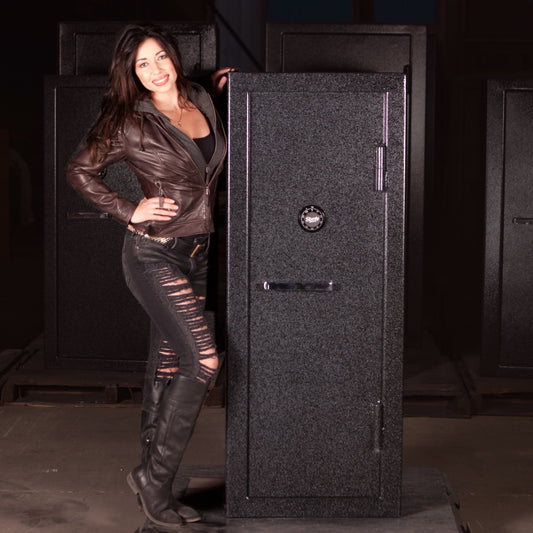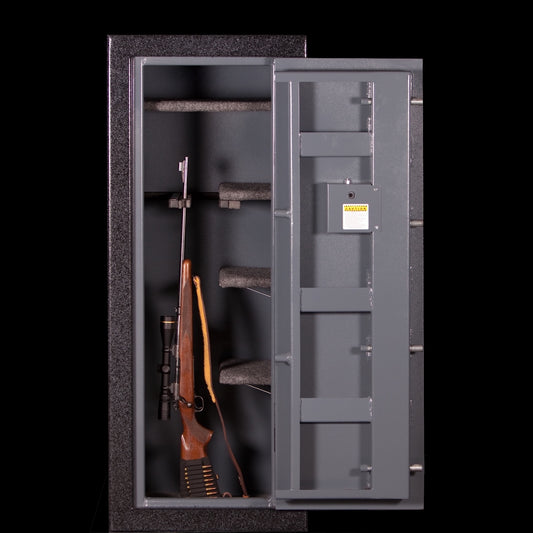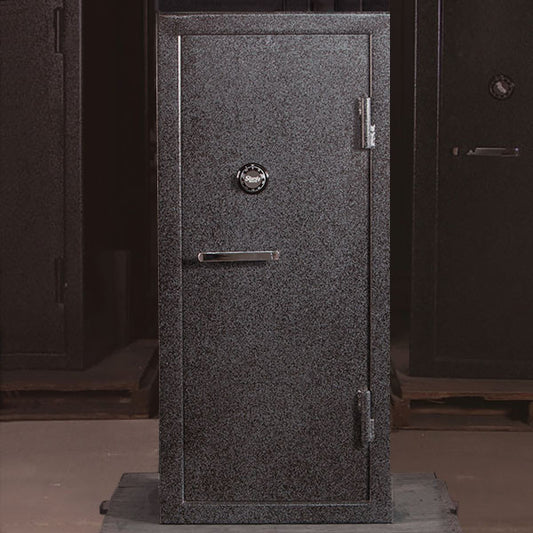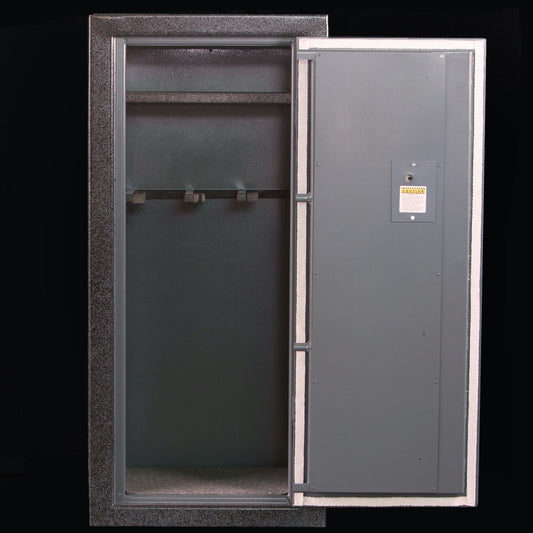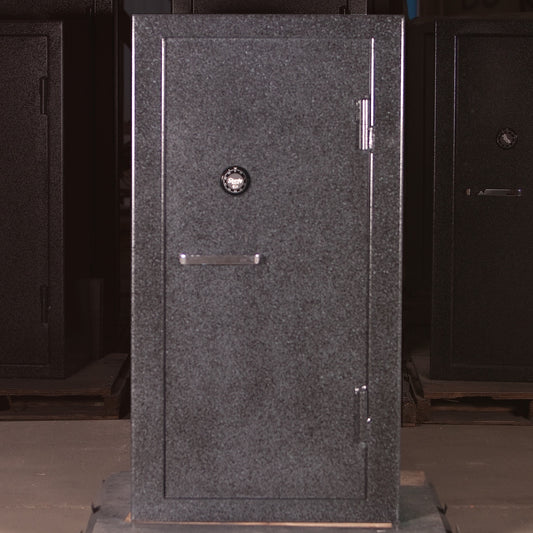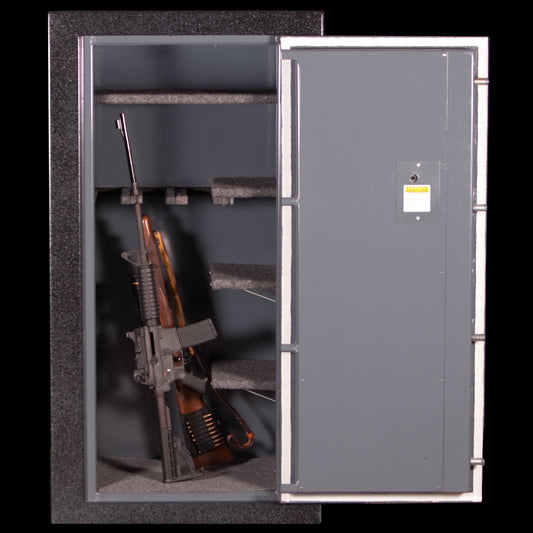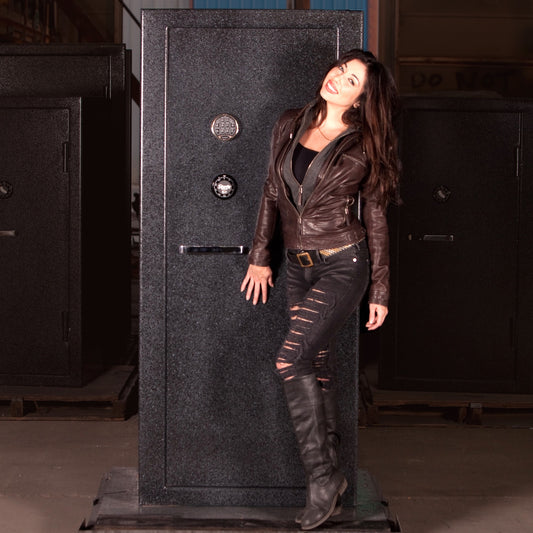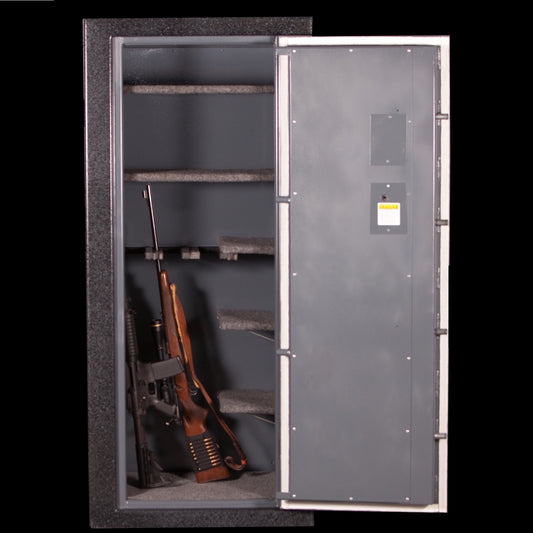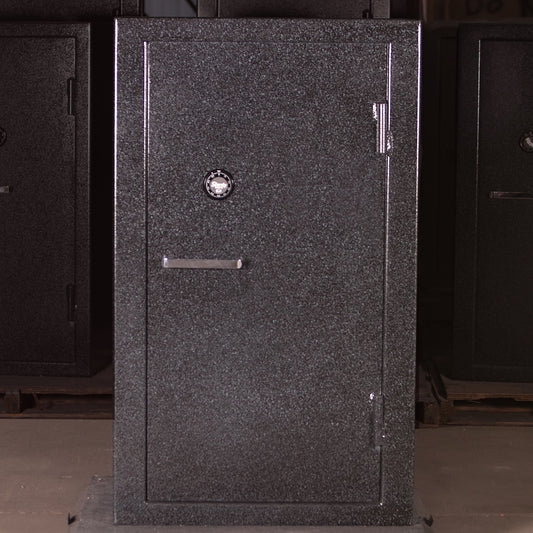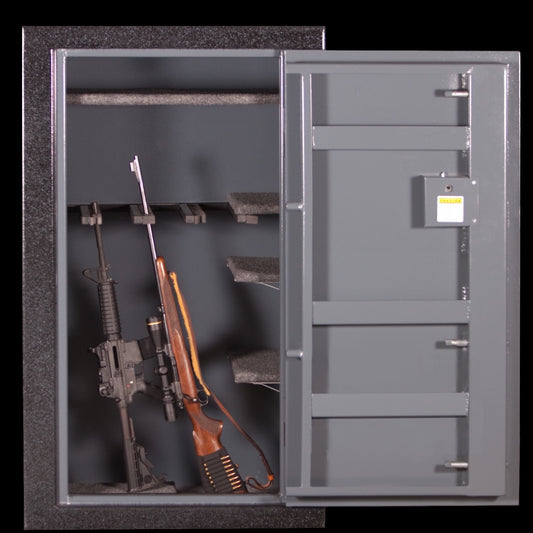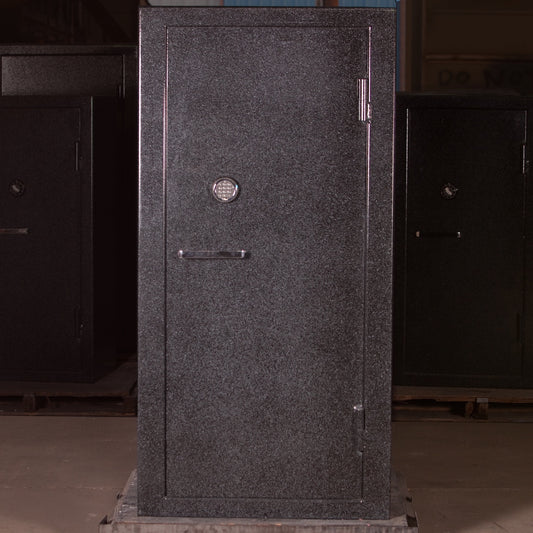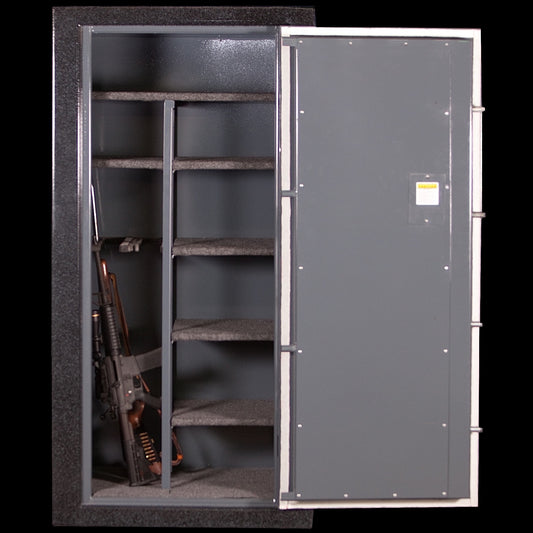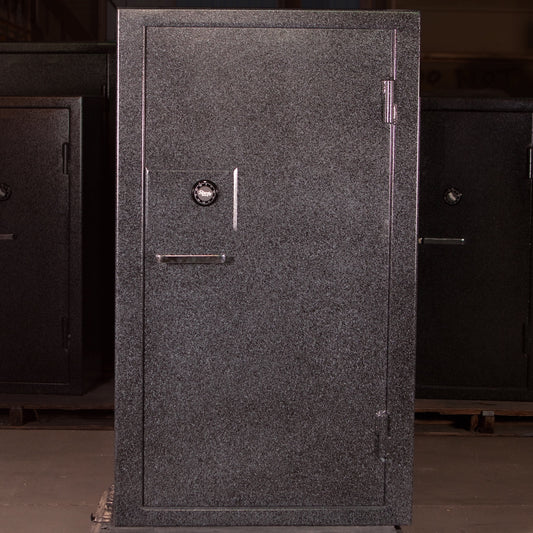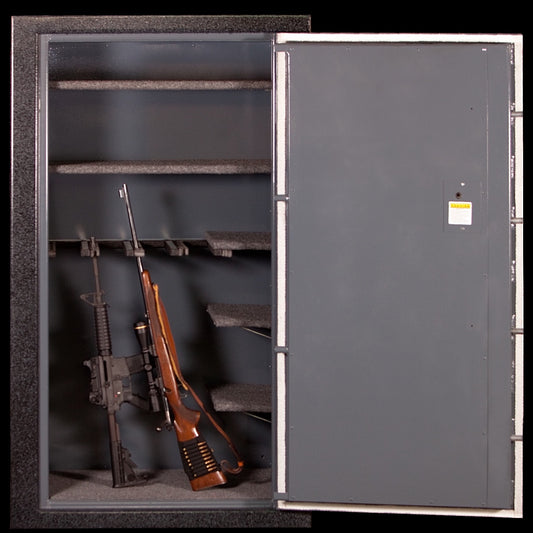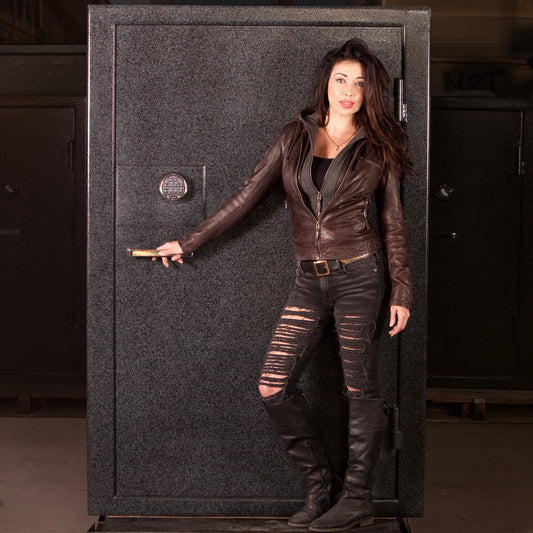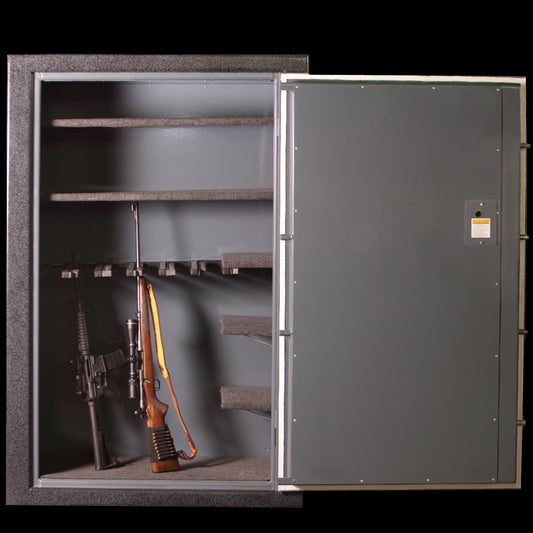
2023 Sturdy Gun Safe Catalog
Printable and downloadable catalog. The most informative catalog in the gun safe industry.

Lowest Price For The Steel Thickness
When comparing Sturdy Gun Safes 3/16" to 9/16" steel thickness to other safes, our bottom line delivered price will be less money every time. Sturdy Gun Safe customers desire real security from thicker steel and they don’t want to settle for what’s available at Costco, Tractor Supply, Bass Pro, Cabelas, Academy Sports, Liberty, Kodiak, Bighorn, Steelwater, Old Glory, Browning, Winchester, Sentury, Rhino, Stack-On, RedHead, etc.
Real Fire Insulation
Sturdy Gun Safe doesn't use a bunch of cheap sheetrock or plaster paris. We use a lot of costly, yet effective, 2300 degree ceramic wool fire insulation that is made to insulate objects from fires, such as ovens and kilns. Our fire safes have survived multiple accidental home burn downs.
Damage Resistant Linkage
Sturdy Gun Safe kept it simple with less moving linkage parts with no potential to break, even with user abuse. You can do things like slam the door, with or without the deadbolts out, and not worry of locking yourself out or needing repairs like you would with any other long gun safe on the market. It’s truly designed to last generations and warrantied to do so.
Unique Options
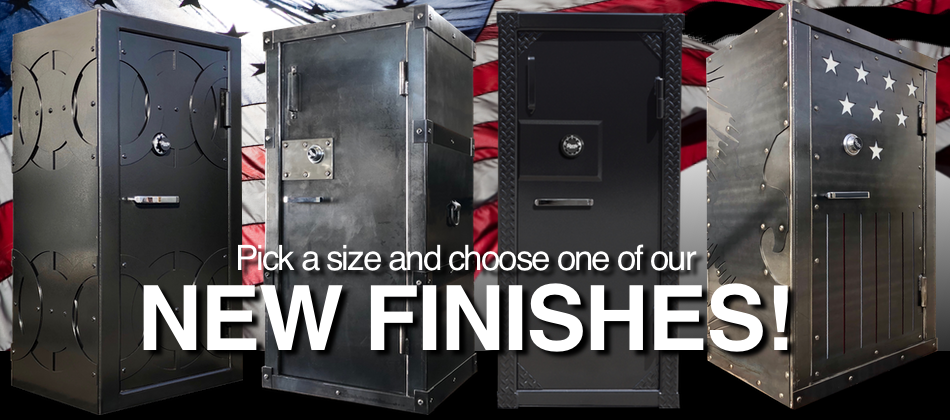
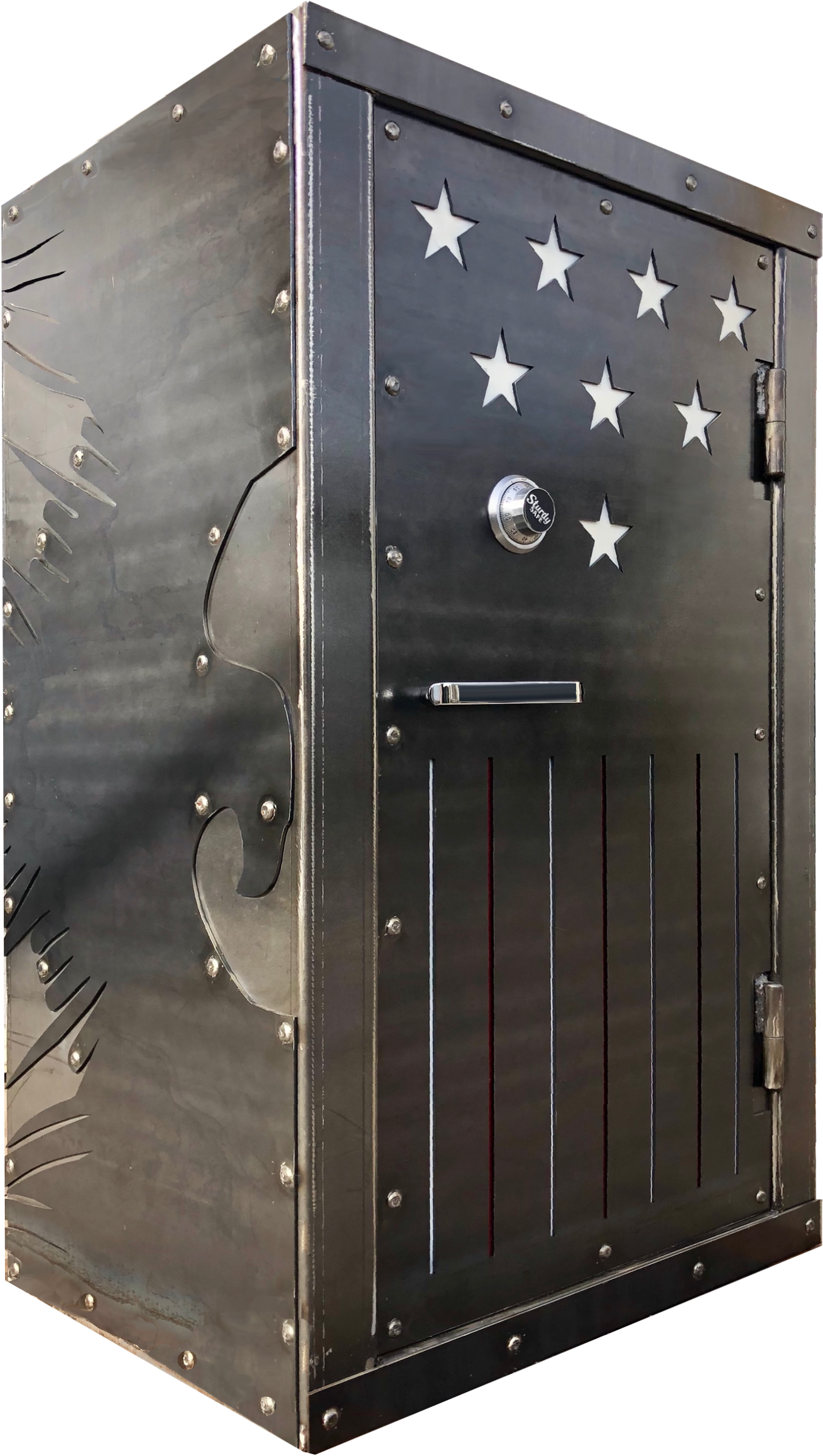
Who else sells mountable floor plates, finishes that add steel and security, fire blankets for the outside or the safes, padlock-able door covers and custom plaques? No one but Sturdy Gun Safe!
Printable and downloadable catalog. The most informative catalog in the gun safe industry.
Protect a gun safe from fire by slowing down the steel body from heating up in the first place!
With no water to quench things down, it's amazing anything survived a fire like this.
Can't anchor down to cement? This new option is for you! Exclusively sold by Sturdy Gun Safe
Watch our gun safes take abuse like no others can! Also includes "How To" videos.
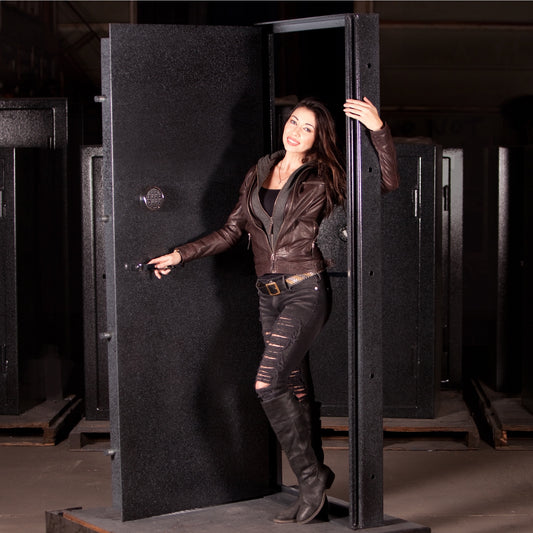
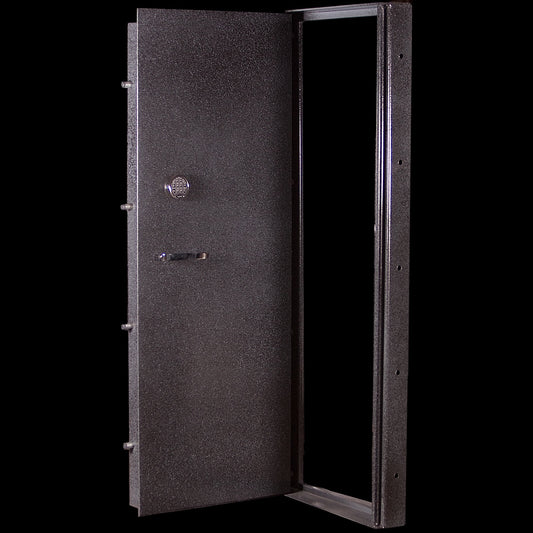
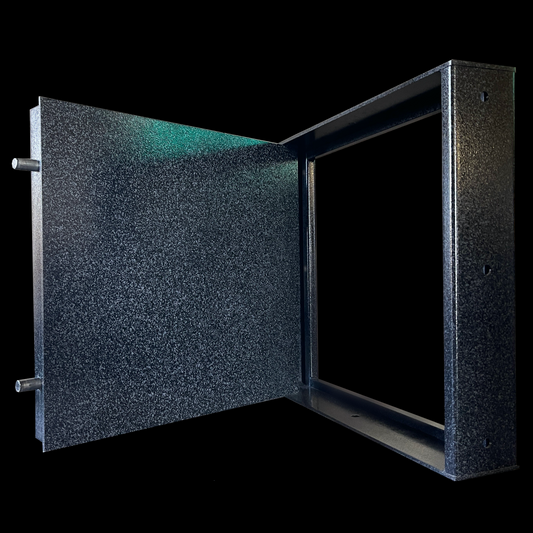
Order your custom size Vault Doors instantly online. Can you believe no one else offers this?
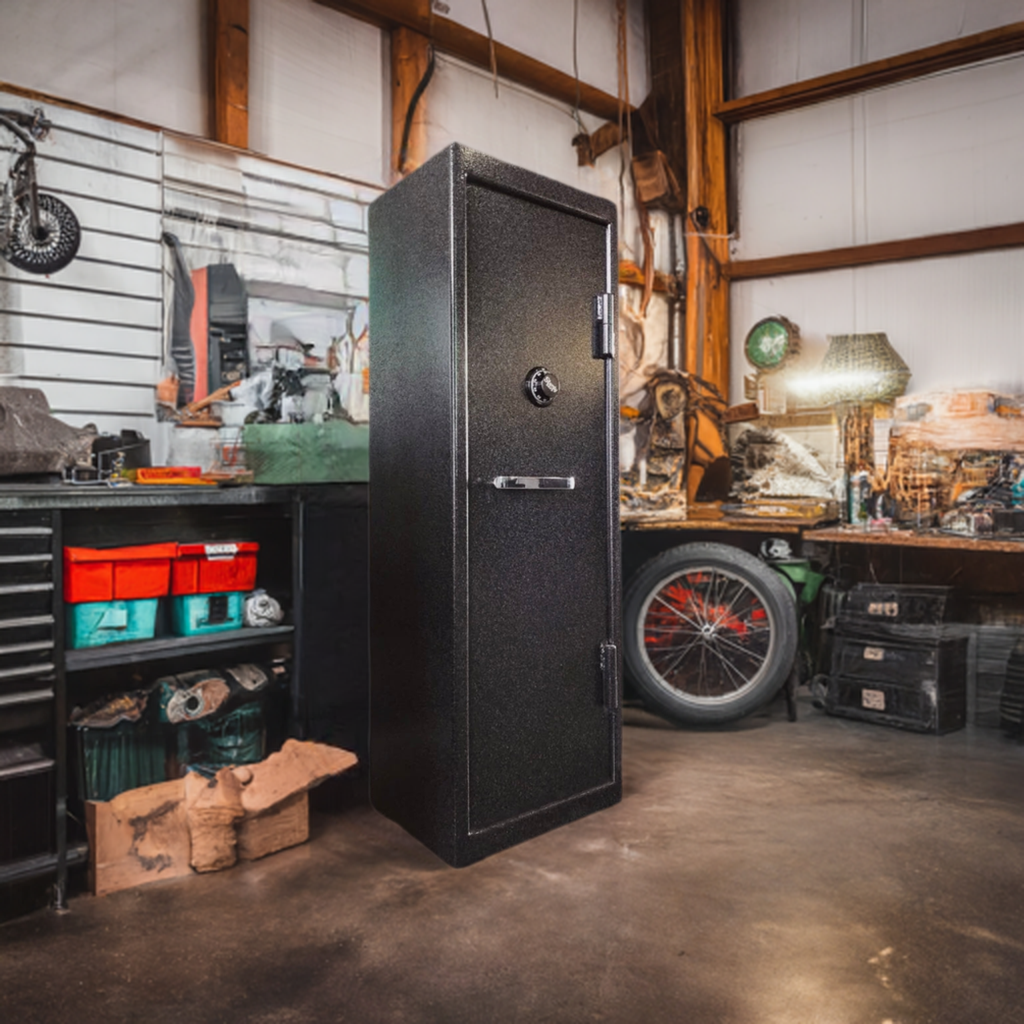
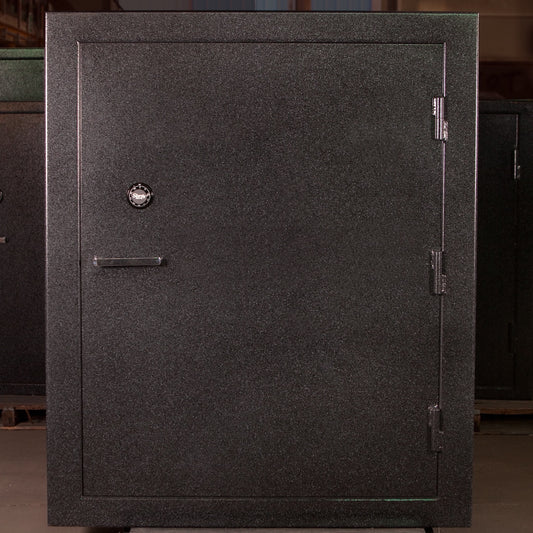
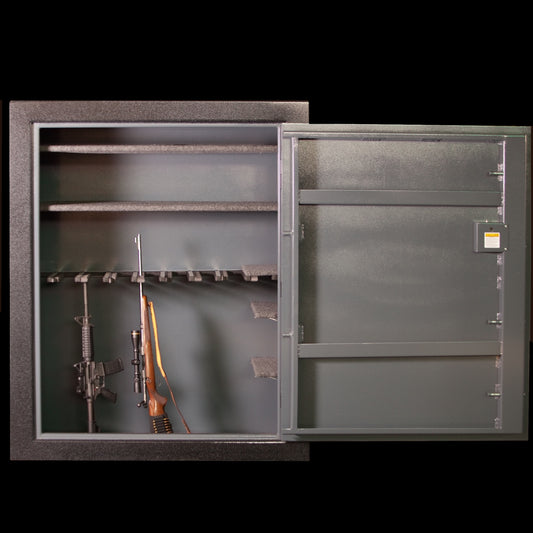
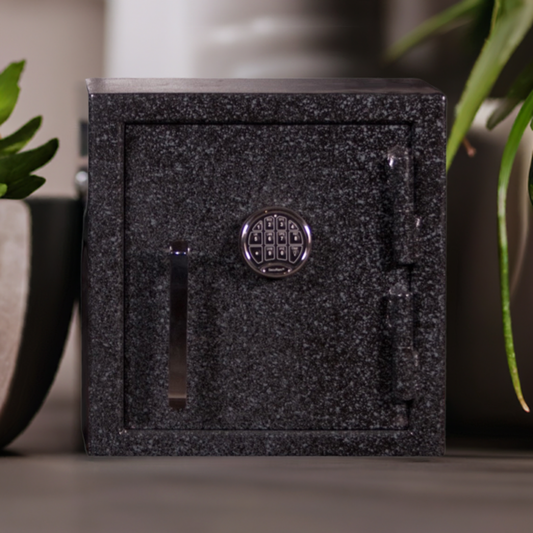
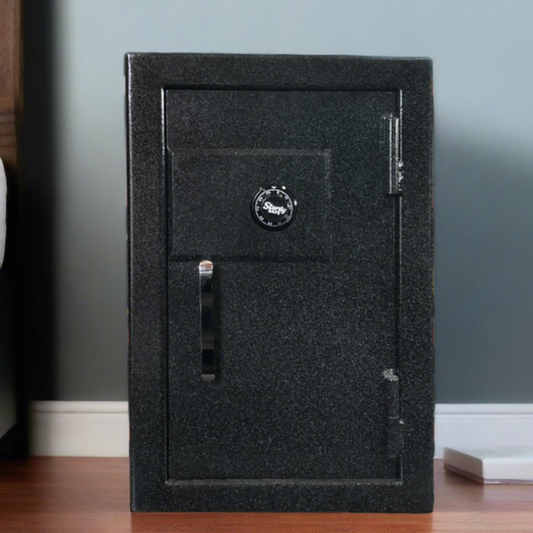
Looking for an affordable safe and don't care what it looks like? No need to settle on our competitors thinner steeled safes at the same price point. All sizes come with a 3/16" body. Depending on the size it will come with either a 5/16" or 3/16" door. These safes won't offer some options such as thicker steel upgrades or finish upgrades, but they'll come with the same great warranty.
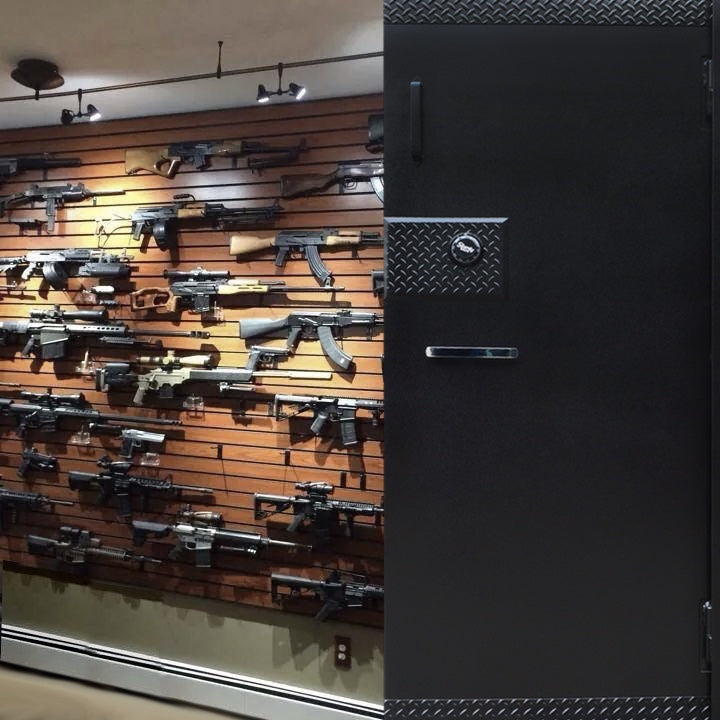
Thicker Steel For Less We have the most affordable vault doors on the market! No one can compare to our 3/8" (or thicker) steel thickness for the price.
Easier To Install Sturdy Vaults are similar to hanging a pre-hung door in a home. Have your opening, set the vault in place, shim, anchor, and fill in any gaps with high tensile mortar.
No Flanges / Easier To Hide A vault door without flanges can be recessed as deep into a wall as you want to go, so you can cover it easier.
Incredibly Customizable Various sizes, options, special requests, ect. We can virtually do anything. Our finishes are the most unique in the industry as well.